Early Life and Scenes in Florida
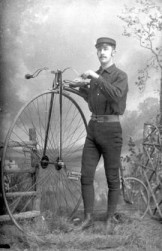
Man and Bicycle
Photographed in Tallahassee between 1885 and 1910, this image by Alvan S. Harper offers a glimpse of daily life in Florida during the late 19th century. It reflects a period of transition and modernization in the state.
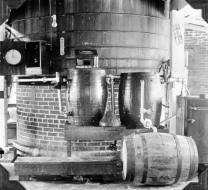
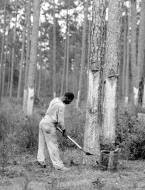
Turpentine Production in Florida
On the left is a still for making turpentine from tree resin in the 1930s. On the right, tree resin is seen dripping into a container during the 1890s. These images, sourced from the Florida State Archives, illustrate the turpentine industry’s significant role in Florida’s economy and labor history.
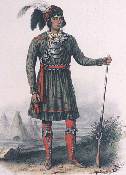
Florida’s Indigenous Heritage
Among Florida’s native population, Osceola remains a symbol of resistance and leadership. A Seminole war leader, he became widely known for refusing to leave Florida during a time of forced removal. There were three major conflicts between the Seminole people and U.S. forces in the 19th century.
Today, Native American communities in Florida reside in several reservations, including Immokalee, Hollywood, Brighton (near Okeechobee), and Big Cypress Swamp. These are home to the Seminole and the separate Miccosukee tribes.
Source: Florida Division of Historical Resources
Key Historical Milestones in Florida
1513 — Juan Ponce de Leon arrived and named the land “Pascua Florida,” marking its discovery during the “Feast of Flowers.”
1586 — British seafarer Sir Francis Drake attacked and burned the town of St. Augustine.
1605 — Franciscan friars became the first teachers in Florida, beginning the region’s formal education efforts.
1821 — General Andrew Jackson received East and West Florida from Spanish authorities, beginning U.S. governance.
1830 — The population reached 34,730 (18,395 white and 16,335 nonwhite residents).
1845 — On March 3, Florida became a state alongside Iowa following an act by the 28th Congress.
1870 — Population grew to 187,748 (96,057 white and 91,691 nonwhite residents).
1885 — Florida authorized its first Confederate pensions, granting veterans $5.00 per month.
1889 — A yellow fever epidemic led to the creation of the State Board of Health.
1930 — Population reached 1,468,211 (1,035,390 white and 432,821 nonwhite residents).
1937 — On June 1, Amelia Earhart departed Miami on the first overwater leg of her round-the-world flight. She and her navigator disappeared on July 2 over the Pacific Ocean.
Territorial Governance and Leadership
East and West Florida were formally transferred from Spain to the United States on July 17, 1821, in Pensacola. President James Monroe appointed General Andrew Jackson as the Governor of the territories. Jackson departed after three months and never returned. William DuVal became Florida’s first civil governor, followed by John Eaton, Richard Keith Call, Robert Reid, Richard Call (again), and John Branch.