
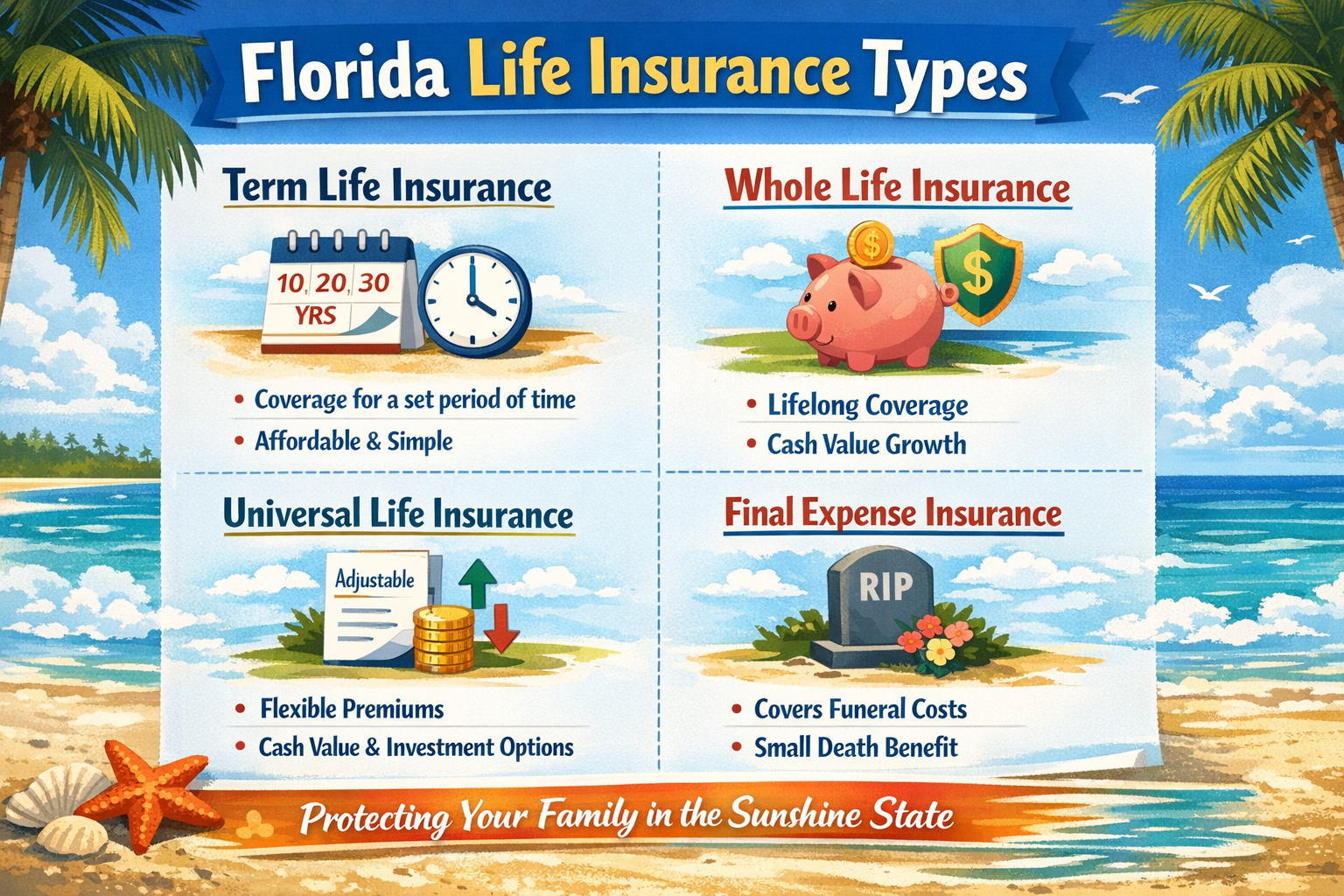
Florida residents face many important choices when it comes to protecting their loved ones. Life insurance is among the most effective tools for ensuring financial security. Selecting the right type of life insurance can feel overwhelming, but understanding the different types and your options makes the process smoother. In Florida, several types of life insurance policies cater to different needs and lifestyles. Policies range from temporary coverage to lifelong protection with investment benefits. Knowing the differences helps you make informed decisions for your family’s future. Factors such as age, health, and financial goals all play a role in choosing the best policy. Ultimately, your choice should provide peace of mind and a sense of security. By learning about Florida’s liFlorida’snce landscape, you can confidently protect those who matter most.
Introduction to The Different Types of Life Insurance in Florida
Florida offers a wide variety of life insurance options for residents. Many people first think of life insurance as just a way to provide money to loved ones after passing away. However, modern policies offer a range of features beyond simple death benefits. Some policies provide temporary coverage, while others offer longer-term coverage. options cater to specific financial needs, such as estate planning, debt repayment, or income replacement. Your personal circumstances play a major role in determining which policy best fits. Understanding and fitting the available choices helps you align your coverage with your goals. In Florida, insurers must comply with state regulations, adding another layer of protection for policyholders. Taking the time to explore your options allows you to make an informed decision without pressure.
Climate and lifestyle can also impact your life insurance needs in Florida. The state’s unique environment brings both opportunities and challenges for policyholders. For example, Florida’s history might shape how you view emergency planning and insurance protection. Additionally, the state’s large population means many insurers offer policies tailored for older adults. Shopping for life insurance in Florida means considering how local factors affect your coverage needs. When you evaluate, remember to factor in both your current lifestyle and long-term plans. Insurers often offer flexible policies to accommodate Florida’s dissolution. As a result, Floridians benefit from a broad range of choices and features.
Many Floridians approach life insurance with questions about cost and eligibility. Policies vary widely in terms of premiums, medical requirements, and benefits. It is important to compare quotes and read policy details carefully before committing. Many insurers offer online calculators to help you estimate costs based on your age, health, and coverage amount. Seeking advice from a licensed Florida agent can also clarify your options. In the end, investing time in understanding your choices ensures you find a policy that truly fits your needs. Life insurance in Florida can be both affordable and comprehensive when you know what to look for.
Exploring Term Life Insurance Policies and the Different Types of Life Insurance in Florida
Term life insurance remains a popular choice in Florida due to its simplicity and affordability. Many people appreciate that term policies provide coverage for a specific period, such as 10, 20, or 30 years. During that time, if the insured person passes away, the policy pays a death benefit to the beneficiaries. Because term life does not build cash value, premiums usually stay lower than those for other policy types. For young families and first-time buyers, term life offers a straightforward way to gain protection. Choosing a term policy can help cover financial obligations like mortgages or college tuition. Comparing term lengths and benefit amounts helps you tailor the policy to your needs. Many insurers in Florida offer policy riders that add flexibility for changing life circumstances.
Flexibility is an advantage of term life insurance in Florida. Many term policies allow policyholders to convert to permanent insurance later. If your financial situation changes, you may appreciate the ability to upgrade your coverage without having to start a new term policy. Policies also include living benefits, which let you access a portion of your death benefit in case of terminal illness. Many Floridians use term life insurance as a stepping stone. For example, you may choose a term policy while young and then transition to permanent coverage as your needs evolve. Shopping around for quotes ensures you find a policy with terms that fit your budget and goals. Term insurance works well for people who want to maximize coverage while keeping costs low.
Cost remains a top concern for many Floridians when considering life insurance. Term life stands out as one of the most budget-friendly options available. Your premium depends on factors like age, health, and the length of the chosen term. Many healthy young adults can secure large amounts of coverage at very affordable rates. Additionally, buying term insurance early locks in lower premiums for the duration of your policy. Reviewing your policy at each renewal helps ensure continued suitability. In summary, term life insurance in Florida offers flexibility, affordability, and straightforward protection for many families.
The Benefits of Whole Life Insurance Coverage
Whole life insurance coverage offers lasting protection for Floridians who appreciate stability and lifelong benefits. Unlike term policies, whole life insurance guarantees coverage for the insured’s lifetime. As long as you pay your premiums, your loved ones will receive a death benefit no matter when you pass away. Many people appreciate knowing that their family’s future is secure for the long term. The policy’s fix policy also makes budgeting easier. Whole life insurance in Florida helps you plan with confidence, especially when long-term peace of mind matters most.
Another major benefit of whole life insurance is its cash value component. Over time, a portion of your premium payments builds up as cash value within the policy. You can borrow against or withdraw this cash value if you need emergency funds. Many Floridians find this feature useful for supplementing retirement income or handling unexpected expenses. Additionally, whole life policies often pay dividends that can be used to reduce premiums or increase coverage. The cash value grows tax-deferred, providing another layer of financial flexibility. As a result, whole life insurance serves as both a protection tool and a financial resource.
Many people in Florida choose whole life insurance for estate planning and legacy purposes. Because the policy lasts for your entire lifetime, it can help cover estate taxes and final expenses. Beneficiaries receive the death benefit free of income tax, providing financial relief. Whole life insurance helps ensure your loved ones face fewer financial burdens after your passing. When combined with other estate planning tools, it creates a comprehensive safety net. In Florida, insurers offer a range of whole life options with customizable features. Comparing policies and consulting with a local agent helps you make the best choice for your unique legacy goals.
Understanding Universal Life Plans for Floridians
Universal life insurance offers Florida residents a flexible approach to lifelong coverage. Unlike whole life insurance, universal life provides adjustable premiums and death benefits. Many Floridians appreciate the ability to change coverage levels as their financial situation evolves. Universal life policies also include a cash value component, similar to whole life, but with more flexibility in how the cash value grows. The policyholder can choose how much to pay in premiums, as long as they cover the insurance cost. Cost stability makes universal life insurance popular among people whose incomes or insurance needs change over time.
Universal life plans offer investment options that can help your policy grow faster. Many policies allow you to allocate cash value to different investment accounts. You may choose between fixed interest options or variable accounts linked to the market. The policy’s flexibility means you can adjust how aggressively you want your cash value to grow. Many Floridians use universal life to supplement retirement savings or fund major life events. Regularly reviewing your policy ensures your coverage and cash value build the way you want. Universal life insurance rewards proactive management and regular check-ins.
One key advantage of universal life insurance in Florida is its ability to adapt to changing needs. If you experience major life events, such as marriage or the birth of a child, you can adjust your coverage accordingly. The policy also allows you to make partial withdrawals or loans against the cash value. For Floridians interested in flexibility and choice, universal life offers a strong option. Comparison of different universal life policies helps you find the right balance between cost, growth potential, and security. Consulting with a knowledgeable agent ensures you fully understand your policy’s options and the different types of life insurance in Florida.
Comparing Group Life and Individual Policies
Floridians often face a choice between group life and individual life insurance policies. Group life insurance is usually offered as part of an employee benefits package. Many people appreciate the convenience of automatic enrollment and payroll deduction. Typically, group policies provide basic coverage at little or no cost to employees. Employers often pay part or all of the premium, making group life insurance an attractive starting point for coverage. However, group policies may offer limited benefit amounts and fewer customization options. Individual life insurance, by contrast, allows you to choose your policy’s benefit amount and riders. When you need personalized coverage, an individual policy often proves more effective.
Portability is an important consideration when comparing group and individual policies in Florida. Group life insurance generally ends if you leave your job, which can create a coverage gap. Some plans offer conversion options, but they may be more costly or limited in benefits. Individual policies stay with you regardless of employment changes, providing greater long-term security. Additionally, individual policies tend to offer more extensive underwriting, which can result in better rates for healthy applicants. Many Floridians choose to supplement group insurance with an individual policy for extra protection. Assessing your long-term needs helps you decide which approach best fits your situation.
Cost remains a significant factor in the group-versus-individual life insurance debate. Individual policies may cost more upfront, but they provide more flexibility and benefits over time. Comparing the total value and features of both options helps you make an informed choice. Many people in Florida ultimately choose a combination of group and individual coverage. Balancing immediate needs with future goals ensures you have the right protection at every stage of life.
Key Factors to Consider Before Purchasing in Florida
Choosing life insurance in Florida requires careful thought and research. One of the first steps is to assess a financial situation and future obligations. Consider factors such as income, debt, family size, and long-term goals. The right policy depends on your unique needs and responsibilities. Comparing different types of policies helps you match coverage to your lifestyle. Additionally, understanding the benefits and drawbacks of each policy type ensures a tailored solution. Shopping around for quotes and reading policy documents can reveal major differences in terms and conditions.
Insurer reputation and financial strength play a crucial role in your decision. Selecting a reputable, financially stable company increases the chances your policy will pay out when needed. Online reviews, ratings from independent agencies, and recommendations from trusted advisors all provide valuable insights. Licensing and regulation in Florida offer some protection, but due diligence remains essential. Many consumers also consider customer service and the speed of claims processing. Good support from your insurer can make a big difference during stressful times. Comparing insurers side by side gives you confidence in your final choice.
Florida’s environment and demographics also influence your insurance needs. Weather risks, such as hurricanes, may affect your overall financial planning. The state’s large population means many insurers offer age-specific products and features. Health status, lifestyle, and retirement plans shape your decision. Consulting with a licensed agent who understands Florida’s provide extra peace of mind. Keeping your policy up to date as your life changes ensures lasting protection. Finally, taking time to review and regularly evaluate your coverage regularly life insurance continue meeting your goals.
Conclusion On The Different Types of Life Insurance in Florida
Life insurance represents an essential foundation of financial security for Florida residents. By understanding the different types of life insurance in Florida and the unique policy options, you can make a confident, informed decision. Whether you prefer the affordability of term life or the lifelong benefits of whole and universal policies, your choice impacts your loved ones for years to come. Comparing individual and group policies ensures your coverage remains portable and effective. Considering local factors, such as Florida’s changing demographics, tailors your policy to real-life needs. Working with reputable insurers and knowledgeable agents provides added reassurance and helps differentiate the types of life insurance in Florida.