|
Edna St. Vincent Millay
Picture courtesy of: Wikipedia.Org
photographed by Carl Van Vechten, 1933 Jan. 14
Library of Congress: http://hdl.loc.gov/loc.pnp/van.5a52412
My candle burns at both ends
It will not last the night;
But ah, my foes, and oh, my friends -
It gives a lovely light.
By Edna St. Vincent Millay, "A Few Figs from Thistles"
~~~~~~~~~~~~~~~~~~~~~~~~~~~~~~~~~~~~~~~~~~~~~~
Edna St. Vincent Millay was born in Rockland, Maine, on February 22,
1892. Her parents were Henry Tolman Millay, a
schoolteacher, and Cora Lounella, a nurse. Her parents divorced when
she was about eight, her mother, Cora, raised her three daughters on
her own after asking her husband to leave the family home in 1899.
Cora encouraged her girls to be ambitious and self-sufficient,
teaching them an appreciation of music and literature from an early
age.
Millay may be best known for her lyrical poetry. She wrote many poems
in traditional sonnet form, on topics such as love, fidelity, erotic
desire, and feminist issues. Millay first poem was published when
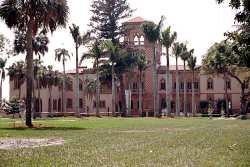
she was a student at Vassar College, NY.
In 1912, Millay entered her poem "Renascence"
into a contest, at the
urging of her mother, she won fourth place and publication in The Lyric
Year, bringing her immediate acclaim and a scholarship to Vassar.
There, she continued to write poetry and
became involved in the theater. Throughout her years at Vassar, Millay
shared her affection with women.
In 1917 she graduated from Vassar, published
Renascence and Other Poems, and took the lead in her own play The
Princess Marries the Page, she also wrote her first verse play,
The Lamp and the Bell in 1921, a work about love between women.
At one point she earned her living with
pseudonymous magazine sketches published under the name Nancy Boyd
and collected in Distressing Dialogues in 1924. With the frank and
cynical love poetry of A Few Figs From Thistles in 1920 ,containing
"First Fig ,"
one of Millay’s most well known and widely quoted poems,
and "Second April" in 1921.
Millay was hailed as the
voice of her generation and embodiment of the New Woman.
Millay, whose friends called her "Vincent," then moved to New York's
Greenwich Village, where she led a notoriously Bohemian life. She lived
in a nine-foot-wide attic and wrote anything she could find an editor
willing to accept. She and the other writers of Greenwich Village were,
according to Millay herself, "very, very poor and very, very merry."
She joined the Province town Players in their early days, and befriended
writers such as Witter Bynner, Edmund Wilson, Susan Glaspell, and
Floyd Dell, who asked for Millay's hand in marriage. Millay, who was
openly bisexual, refused, despite Dell's attempts to persuade her
otherwise. That same year, while living in Greenwich Village,
then at its height as a meeting place for artists and writers, Millay
published A Few Figs from Thistles,
a volume of poetry which drew much attention for its
controversial descriptions of female sexuality and feminism.
Her fourth volume of poems, The Harp Weaver, was awarded the Pulitzer
Prize. In addition to publishing three plays in verse, Millay also
wrote the libretto of one of the few American grand operas, The King's
Henchman in 1927.
After two years
in Europe as a correspondent for Vanity Fair, she married Eugene Jan
Boissevain in 1923,a self-proclaimed feminist and widower
of Inez Milholland, Millay had earlier devoted a sonnet to the
memory of his first wife, her suffragist idol.
With the approach and onset of World War II,
Millay became increasingly alarmed at the rise of fascism in Europe,
and participated in a number of public forums promoting US preparedness
and involvement. She also published Make Bright the Arrows and
Notebook in 1940, which consisted of "poems for a world at war."
She wrote The Murder of Lidice, her 1942 radio play, at the
request of the Writer’s War Board. Collected Lyrics, Collected Sonnets,
and Collected Poems appeared in 1939, 1941, and 1956. Millay’s
letters (located at Vassar and elsewhere) were published in 1952,
edited by her close friend Allan Ross MacDougal.
He husband Boissevain gave up his own pursuits to
manage Millay's literary career, setting up the readings and public
appearances for which Millay grew quite famous. According to Millay's
own accounts, the couple acted liked two bachelors, remaining "sexually
open" throughout their twenty-six-year marriage, which ended with
Boissevain's death in 1949. Edna St. Vincent Millay died at her
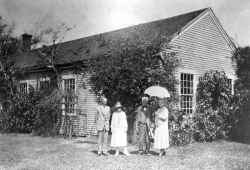
home, Steepletop, in Austerlitz, New York in October, 1950.
When The Years Grow Old
The Suicide
Kin To Sorrow
Blight
Ashes of Life
~~~~~~~~~~~~~~~~~~~~~~~~~~~~~~~~~~~~~~~~~~~~~~
To view more of Millay's poems:
Famous Poets and Poems
~~~~~~~~~~~~~~~~~~~~~~~~~~~~~~~~
Some more of her poems includes:
Interim, God's World, Afternoon on a Hill, Tavern,
The Little Ghost, Three Songs of Shattering, The Shroud,
The Dream, Indifference, Witch-Wife, Spring, City Trees,
The Blue-Flag in the Bog,
Journey,
Eel-Grass,
Elegy Before Death,
The Bean-Stalk,
Weeds,
Passer Mortuus Est,
Pastoral,
Assault,
Travel,
Low-Tide,
Song of a Second April,
Rosemary,
The Poet and His Book,
Alms,
Inland
To a Poet that Died Young,
Wraith,
Ebb,
Elaine,
Burial,
Mariposa,
The Little Hill,
Doubt Not More That Oberon,
Lament,
Exiled,
The Death of Autumn,
Ode to Silence,
Memorial to D.C.
~~~~~~~~~~~~~~~~~~
[Poet's Corner Index]
~~~~~~~~~~~~~~~~~~
Reference, Research and Source Information
The History Channel
Biography.Com
Everypoet.com
Isle of Lesbos
The images copyrights belong to the respective artist, has expired or are in public domain.
I take no credit for any of the information and have no personal knowledge of
the events and I am not representing such.
The format, reformatting, presentation and order of placement of the content is mine. The contents
is presented for information and educational purposes.
I have sincerely and honestly tried to follow all guidelines, terms of use and
copyright notices for using information from the above sources and have given
complete titles, web site addresses, credit, etc. to the best of my abilities.
If the information I have provided concerning where and how the information
was obtained is not properly done or credited, it is in no way intentional.
|
|
|
|